
Brand Management Is Critical Now More Than Ever!
Why the most valuable brands are not simply built — they are managed over time.
Most organisations understand the importance of brand development. They invest in strategy, identity, messaging, websites, campaigns, content, social media, and sales materials. They also understand the importance of marketing execution such as getting the brand into market, creating visibility, generating leads, and maintaining momentum.
But too many organisations are still missing the most important part.
They focus on the beginning of the brand journey and the noise of the marketplace, while underinvesting in the long-term management of brand value.
And this is where many brands slowly lose power.
Not overnight. Not dramatically. But gradually through inconsistent decisions, disconnected messaging, fragmented campaigns, outdated assets, internal misalignment, poor customer experience, and a lack of strategic governance.
A brand does not weaken because one logo is wrong, one campaign underperforms, or one piece of communication misses the mark. A brand weakens when nobody is actively managing the relationship between identity, meaning, reputation, market relevance, customer experience, and commercial value over time.
That is why Brand Management is now one of the most critical strategic marketing functions an organisation can invest in.
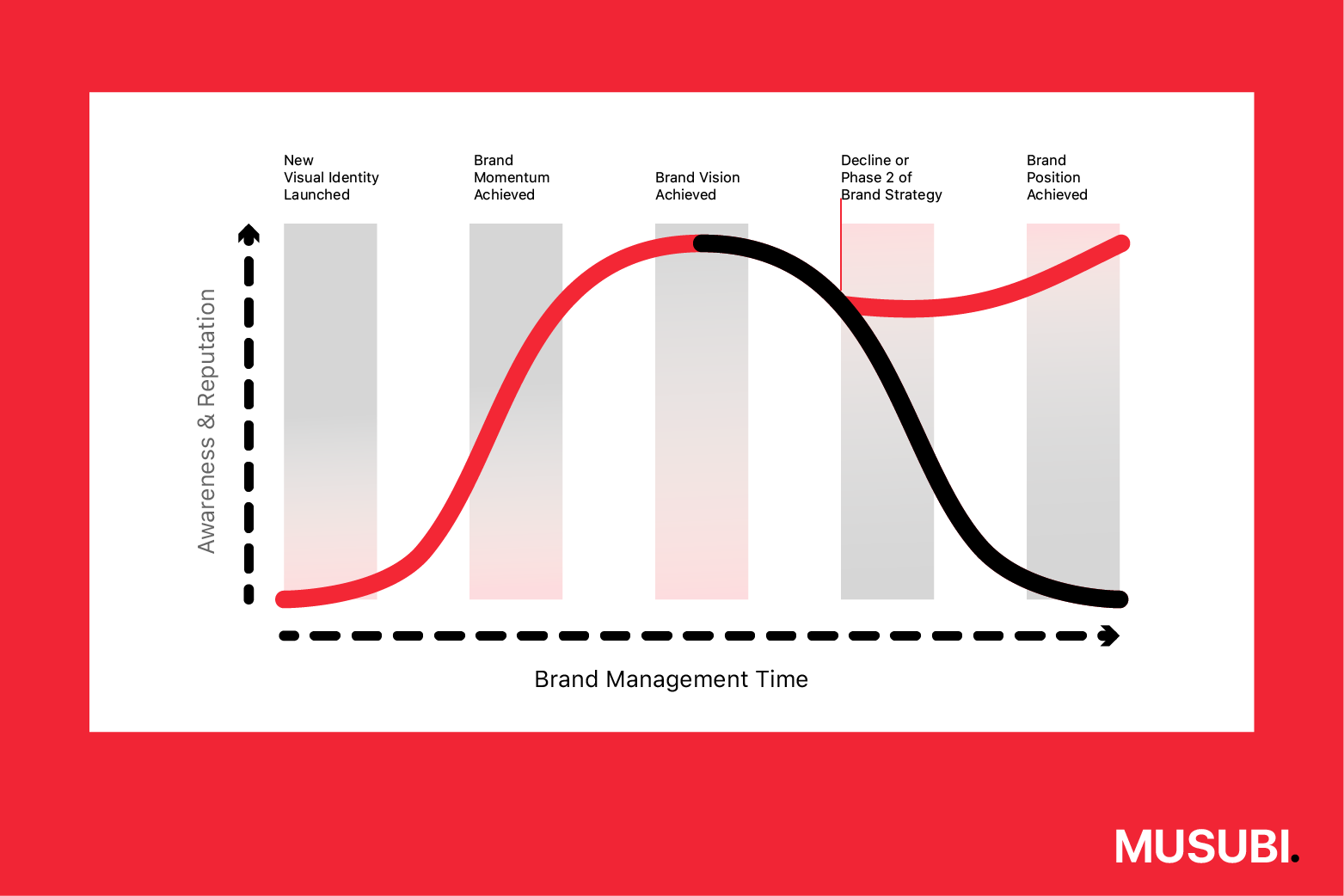
Brand Management is not maintenance. It is value creation.
Brand Management is often misunderstood as keeping things tidy: making sure the logo is used correctly, campaigns look consistent, social media is active, and marketing materials are on brand.
That is part of it. But it is nowhere near enough.
True Brand Management is the continuous strategic process of shaping how people perceive, experience, trust, choose, and value an organisation.
It is the discipline of ensuring that every touchpoint, from advertising and customer service to culture, product, partnerships, digital presence, sales conversations, physical environments, and leadership behaviour, reinforces the same strategic meaning.
It is not just about looking better.
It is about becoming more valuable.
Because the strongest brands are not valuable simply because they are known. They are valuable because people know what they mean, trust what they promise, and believe they will continue to deliver.
That is brand equity.
And brand equity is not built through one campaign. It is built through disciplined, coherent, long-term Brand Management.
The missing word: time
Most organisations think about brand in terms of launch, visibility, awareness, or marketing activity.
But the real power of brand lives in time.
Products have life cycles. Services evolve. Markets shift. Customer expectations change. Technology accelerates. Competitors copy. Platforms rise and disappear. Campaigns come and go.
A brand, however, can live on indefinitely but only if it is actively managed, adapted, protected, and renewed.
This is why Brand Management matters so much now.
We are operating in a dynamic environment where organisations need both consistency and flexibility. They need a clear strategic centre, but they also need the ability to respond to new markets, new audiences, new technologies, new behaviours, and new commercial pressures.
Without Brand Management, change creates fragmentation.
With Brand Management, change becomes momentum.
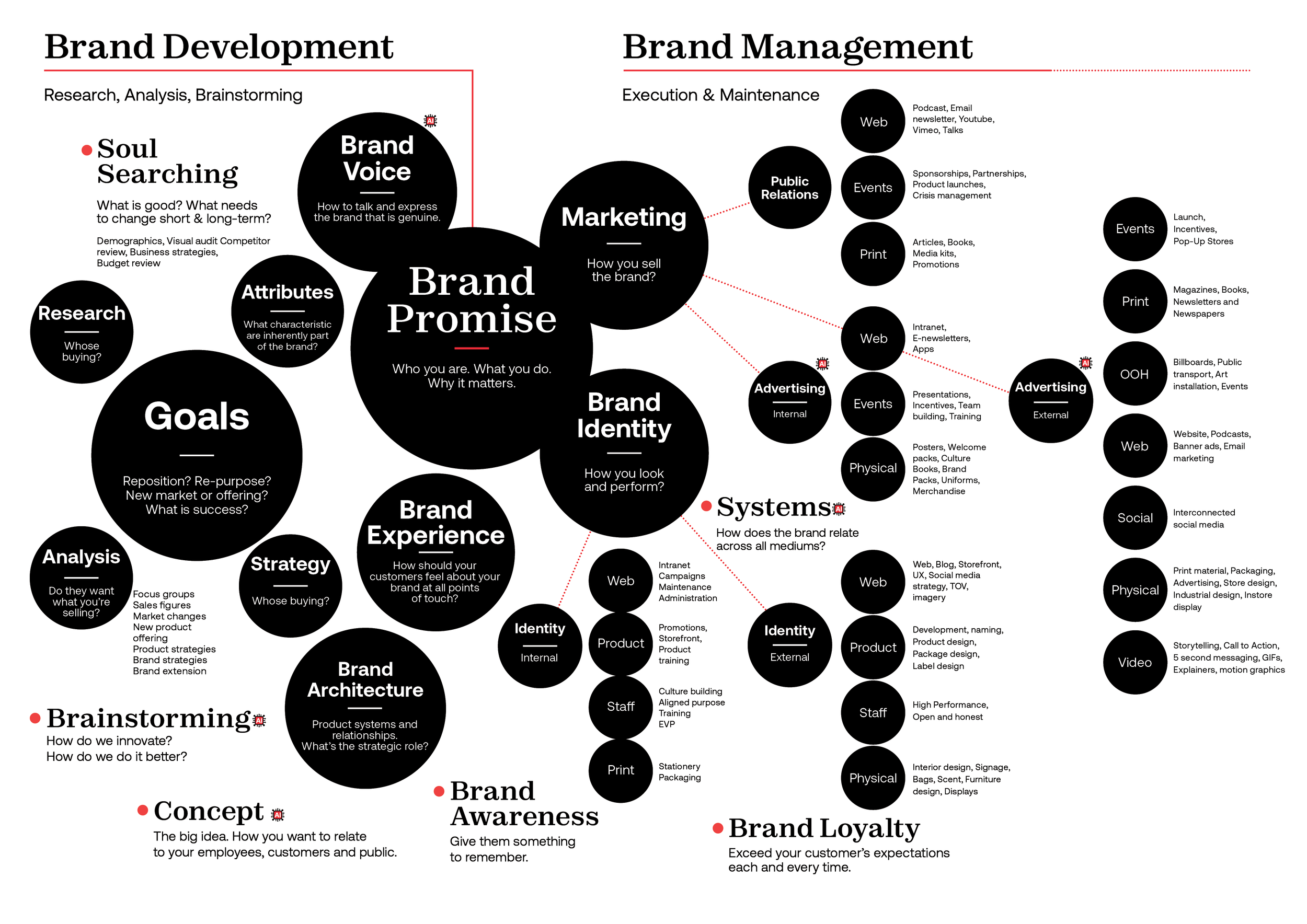
The Musubi Brand Roadmap
At Musubi, we use the Brand Roadmap as a world’s best-practice framework for building and managing brands with clarity, consistency, and long-term commercial value.
The Brand Roadmap is divided into two essential parts:
Brand Development and Brand Management.
Brand Development defines the strategic foundation. It includes research, analysis, brainstorming, positioning, brand voice, attributes, goals, brand architecture, brand experience, identity, and the creation of the Central Organising Idea.
Brand Management then turns that strategy into a living system. It ensures the brand is executed, maintained, measured, protected, and evolved across every relevant medium — web, social, print, events, advertising, internal culture, staff behaviour, product, physical spaces, partnerships, public relations, and customer experience.
The central point of the roadmap is the Central Organising Idea.
This is the strategic heart of the brand.
It defines:
Who you are.
What you do.
Why it matters.
It becomes the enduring Brand Promise. The organising force that guides decisions, messaging, marketing, behaviour, design, innovation, culture, and growth.
Without a Central Organising Idea, brands become reactive.
With one, they become coherent.
Why the Brand Roadmap is an investment, not a cost
A Brand Roadmap gives an organisation something far more valuable than a campaign plan or a design system.
It gives leadership a strategic operating system for brand growth.
It helps organisations make better decisions faster, because everyone understands what the brand stands for and how it should behave.
It improves marketing efficiency, because campaigns, content, assets, and channels are no longer created in isolation.
It strengthens internal alignment, because staff can understand the role they play in delivering the brand.
It increases customer trust, because the brand feels more consistent, more intentional, and more reliable across every interaction.
It protects brand equity, because the brand is not left to drift with personal opinions, short-term trends, or fragmented execution.
And critically, it safeguards strategic flexibility.
That is one of the most important benefits.
A strong Brand Roadmap does not make a brand rigid. It makes it more adaptable. When the centre is clear, the expression can evolve. The brand can enter new markets, launch new services, change its messaging, modernise its identity, build new partnerships, adopt new technologies, and respond to cultural shifts without losing itself.
This is the difference between a brand that simply changes and a brand that evolves.
Brand Management protects against the “mushy middle”
In crowded markets, the danger is not always failure. Sometimes the bigger danger is sameness.
Many organisations slowly drift into what we call the mushy middle — a place where the brand looks acceptable, sounds professional, says similar things to competitors, and appears active in market, but lacks true distinction.
This usually happens when marketing is busy but the brand is unmanaged.
The organisation may be producing content, running campaigns, updating the website, posting on social media, attending events, refreshing collateral, and creating new sales materials. But if all of this activity is not governed by a clear brand system, the result is often noise rather than value.
Brand Management prevents this.
It ensures the brand is not just present, but purposeful.
Not just visible, but valuable.
Not just active, but strategically consistent.
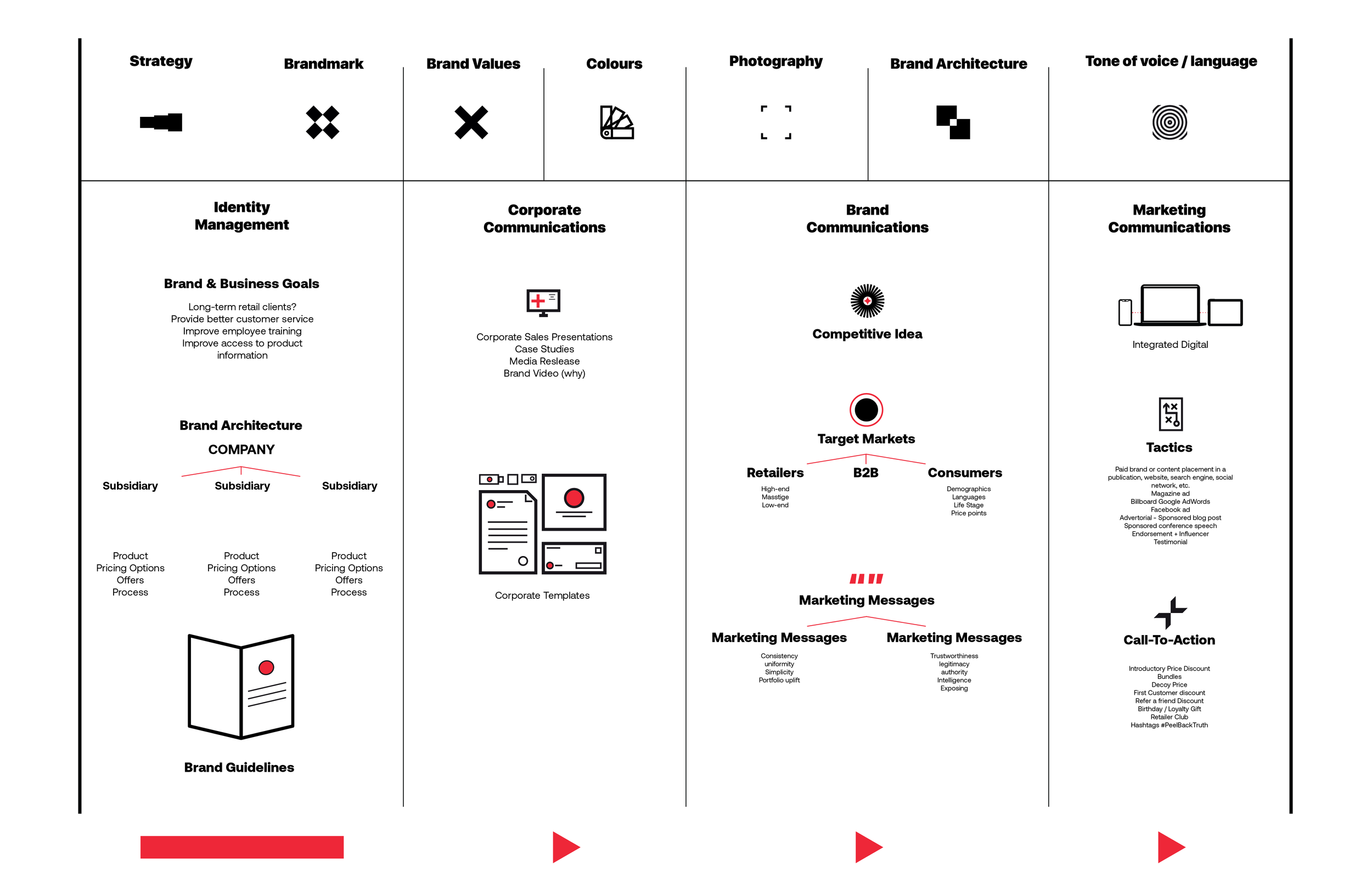
The core pillars of Brand Management
Effective Brand Management requires several moving parts to be managed together.
Brand Identity
The tangible expression of the brand such as logo, colour, typography, imagery, packaging, environments, voice, digital presence, and design language.
Brand Positioning
The strategic place the brand occupies in the mind of the market. It answers the question: why should someone choose you over someone else?
Brand Equity
The commercial value created by perception, trust, recognition, loyalty, and reputation. This is why people pay more, stay longer, forgive faster, and advocate more strongly for brands they believe in.
Brand Communications
The system of storytelling across advertising, PR, social media, content, email, events, sales materials, internal communications, and leadership messaging.
But these pillars do not manage themselves.
Without an overarching roadmap, each pillar can easily become separated from the others. Identity becomes decoration. Positioning becomes a statement. Communications become content. Marketing becomes activity. Culture becomes internal noise.
The role of Brand Management is to integrate all of it into one coherent system.
Why organisations invest in Musubi
Organisations invest in Musubi because they understand that a brand is one of their most important commercial assets.
A well-managed brand can support premium pricing because customers are willing to pay more for brands they trust.
It can increase loyalty because people return to brands that consistently meet emotional and practical expectations.
It can improve market differentiation because strong brands make choice easier.
It can strengthen business resilience because high-equity brands recover faster from setbacks, downturns, competition, and reputational pressure.
It can improve efficiency because marketing assets, campaigns, content, and communications are created from one clear strategic foundation.
It can support growth because the brand can expand into new markets, products, services, audiences, and partnerships without becoming diluted.
Most importantly, it protects the organisation from wasting time and money on disconnected brand and marketing activity.
Because without Brand Management, every campaign risks becoming a one-off.
With Brand Management, every campaign becomes part of a compounding system.
Brand Management is leadership
The strongest brands are not managed only by marketing departments.
They are led.
They are understood by the CEO, embedded in culture, expressed through people, reinforced through customer experience, and protected through every strategic decision.
This is why Brand Management is not merely a creative function. It is a leadership function.
It gives an organisation the ability to ask better questions:
Does this decision strengthen or weaken the brand?
Does this message build equity or create confusion?
Does this campaign express the Central Organising Idea?
Does this product or service fit the brand architecture?
Does this customer experience deliver the promise?
Does this partnership increase reputation and relevance?
Does this investment build long-term value or short-term noise?
These are not cosmetic questions.
They are commercial questions.
The big picture
A product can become outdated.
A service can be replaced.
A platform can lose relevance.
A campaign can disappear.
But a brand, if properly managed, can endure, adapt, and grow in value over decades.
That is why Brand Management is critical now more than ever.
In a world of constant change, the organisations that win will not simply be the ones that market harder. They will be the ones that manage meaning, trust, reputation, experience, and value with greater discipline.
They will be the ones with a roadmap.
They will be the ones with a clear Central Organising Idea.
They will be the ones that understand brand is not a department, a logo, a campaign, or a slogan.
Brand is the organising force of the business.
And the better it is managed, the more valuable it becomes.
Can you afford not to engage Musubi?
If your organisation is investing in marketing, content, campaigns, digital, customer experience, culture, recruitment, partnerships, sales, and growth (but does not have a clear Brand Roadmap guiding all of it) then your brand may already be leaking value.
Musubi helps organisations define, develop, manage, and grow brands with strategic clarity and long-term discipline.
We build the roadmap.
We define the Central Organising Idea.
We align the assets.
We manage the system.
We help brands become more distinguishable, more trusted, more resilient, and more valuable over time.
Ready to turn your brand into a long-term growth asset?
Contact Musubi Brand Agency to discuss a Brand Review and discover how a Musubi Brand Roadmap can strengthen your organisation’s reputation, relevance, and commercial value.